1
Tokyo Sky Tree
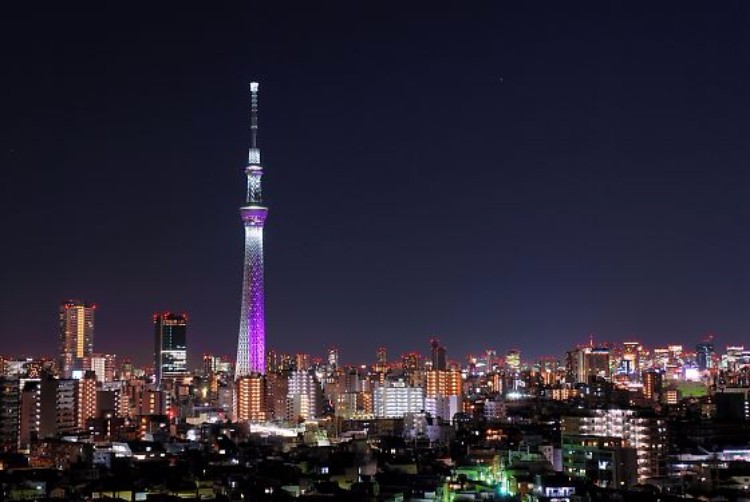
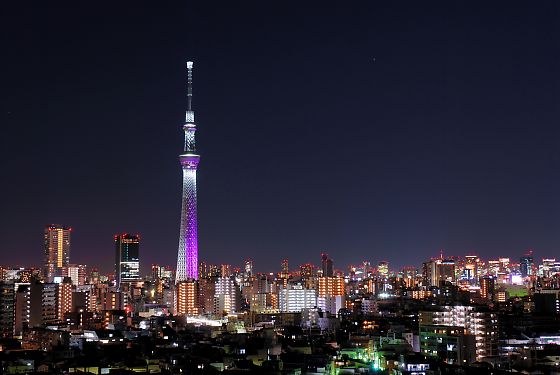
Tokyo Sky Tree, at 634 meters high, is the world's tallest free-standing broadcasting tower. The Tembo Deck, located 350 meters above ground, commands a panoramic view of the Kanto region, and even Mt. Fuji in the distance when the sky is clear. At night, the tower is illuminated alternately in the beautiful pale blue 'Iki'and violet 'Miyabi' themes. Tokyo Solamachi, the neighboring commercial complex, is home to more than 300 establishments including a planetarium, an aquarium, and shops, which constantly transmit trends and information. Tokyo Sky Tree is a world-class landmark of Tokyo.
Sensoji
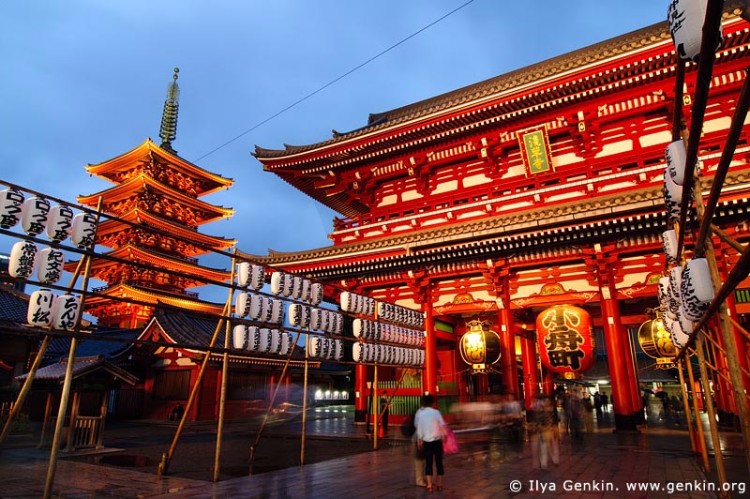
Founded in 628, Sensoji Temple is the oldest temple in Tokyo. Many people believe that the Asakusa Kannon deity enshrined here has the ability to bestow benefits on earth, and around 30 million visitors from throughout Japan and abroad visit the temple every year. It was the epicenter for the development of Edo culture, and these traces still remain today. Many seasonal events are held including the Hozuki (Chinese lantern plant) Market and Hagoita (wooden paddle) Market. The huge lanterns hung at Kaminari (Thunder) Gate are very famous throughout Japan.
Shinjuku Gyeon
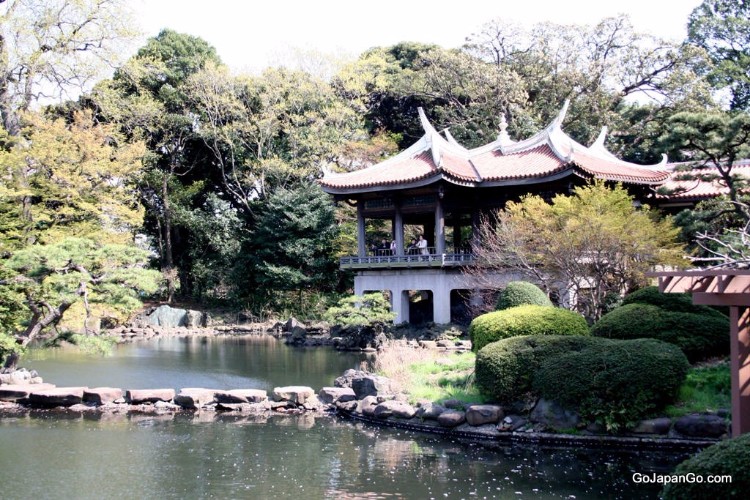
The garden, spanning an area of 583,000 square meters, blends three distinct garden styles: Japanese traditional, French formal and English landscape. Celebrated for its cherry blossoms in spring and scarlet foliage in autumn, the garden serves as an oasis in the heart of Tokyo.
Fushimi Inari Taisho
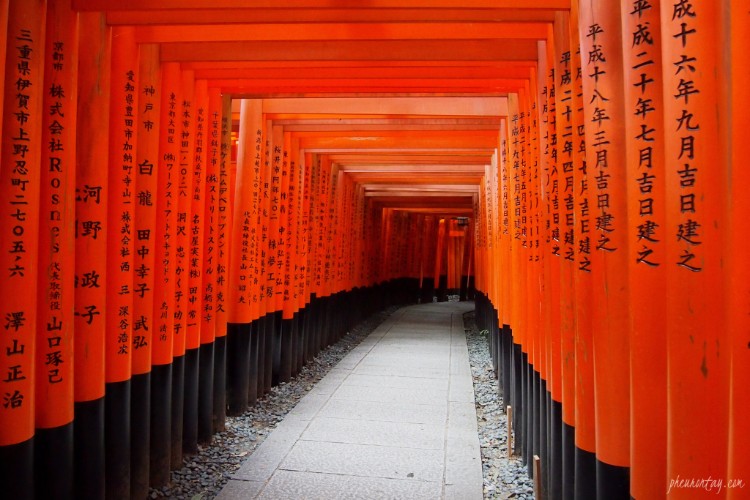
Fushimi Inari Taisho is an important Shinto shrine in southern Kyoto. It is famous for its thousands of vermilion torii gates, which straddle a network of trails behind its main buildings. The trails lead into the wooded forest of the sacred Mount Inari, which stands at 233 meters and belongs to the shrine grounds.
Kinkaku-ji
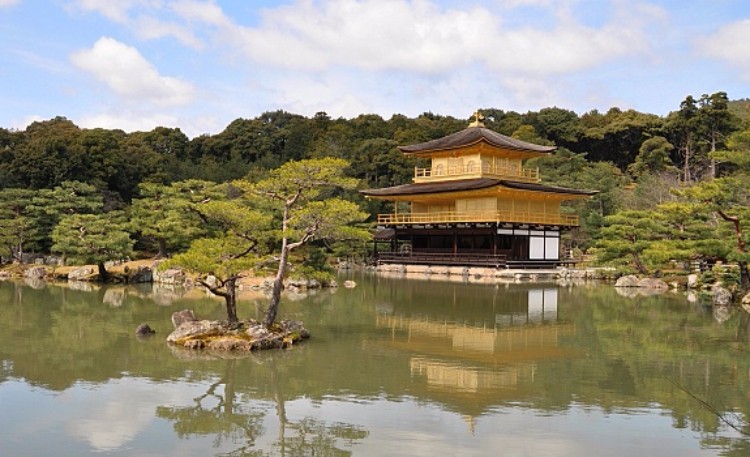
Kinkakuji is a Zen temple in northern Kyoto. The pavilion successfully incorporates three distinct styles of architecture which are shinden, samurai, and zen, specifically on each floor.Each floor of the Kinkaku uses a different architectural style.The first floor, called The Chamber of Dharma Waters, is rendered in shinden-zukuri style, reminiscent of the residential style of the 11th century Heian imperial aristocracy.It is evocative of the Shinden palace style. It is designed as an open space with adjacent verandas and uses natural, unpainted wood and white plaster. This helps to emphasize the surrounding landscape. The walls and fenestration also affect the views from inside the pavilion. Most of the walls are made of shutters that can vary the amount of light and air into the pavilion and change the view by controlling the shutters' heights. The second floor, called The Tower of Sound Waves,is built in the style of warrior aristocrats, or buke-zukuri. On this floor, sliding wood doors and latticed windows create a feeling of impermanence. The second floor also contains a Buddha Hall and a shrine dedicated to the goddess of mercy, Kannon. The third floor is built in zen style, also known as zenshū-butsuden-zukuri. It is called the Cupola of the Ultimate. The zen typology depicts a more religious ambiance in the pavilion .The roof is in a thatched pyramid with shingles.The building is topped with a bronze phoenix ornament.
Sanjusangendo
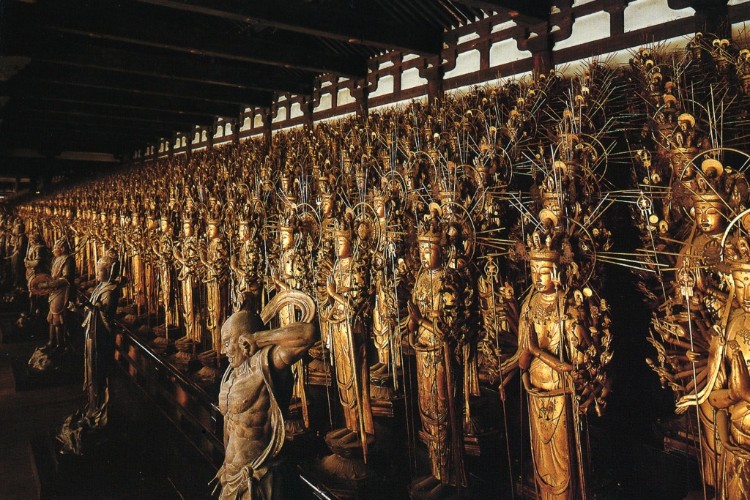
Sanjusangendo is the popular name for Rengeo-in, a temple in eastern Kyoto which is famous for its 1001 statues of Kannon, the goddess of mercy. The temple was founded in 1164 and rebuilt a century later after the original structure had been destroyed in a fire. Measuring 120 meters, the temple hall is Japan's longest wooden structure. The name Sanjusangendo (literally "33 intervals") derives from the number of intervals between the building's support columns, a traditional method of measuring the size of a building. In the center of the main hall sits a large, wooden statue of a 1000-armed Kannon (Senju Kannon) that is flanked on each side by 500 statues of human sized 1000-armed Kannon standing in ten rows. Together they make for an awesome sight. 1000-armed Kannon are equipped with 11 heads to better witness the suffering of humans and with 1000 arms to better help them fight the suffering. Note that the actual statues have only 42 arms each. Subtract the two regular arms and multiply by the 25 planes of existence to get the full thousand.
Dotonbori
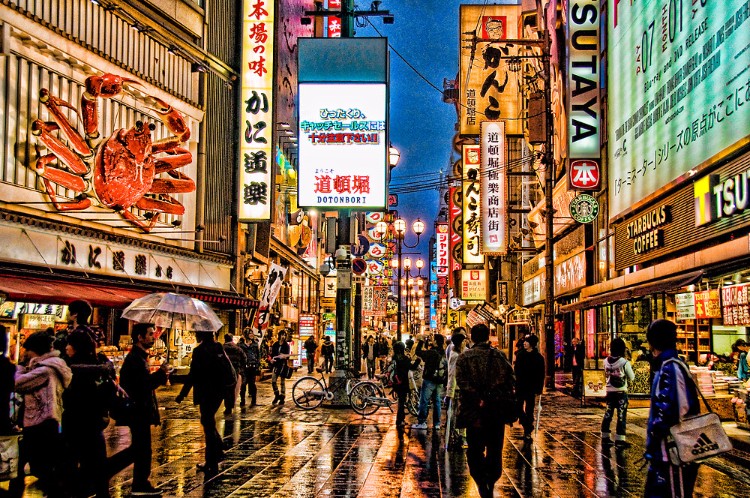
A bustling shopping district in the south area of Osaka. The streets a lined with places to eat and drink, and the area teems with people, especially at night and at the weekends. The Glico sign visible from Ebisubashi is one of the trademarks of Dotonbori.
Kaiyukan
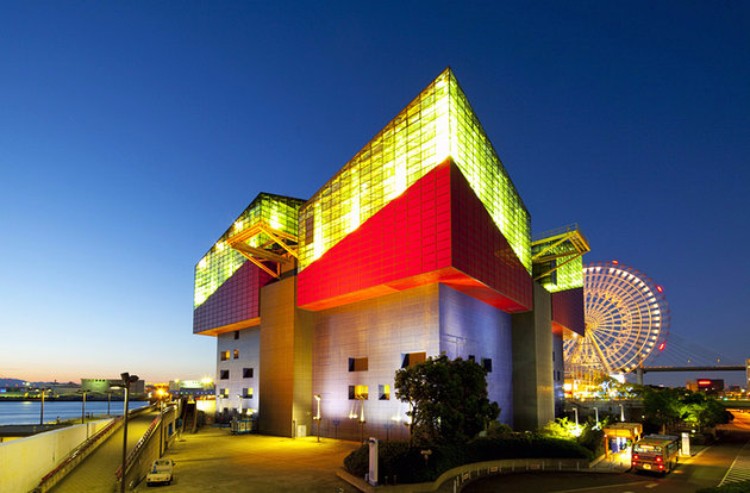
Kaiyukan is one of Japan's most spectacular aquariums, world-renowned for its innovative presentation. Kaiyukan shows the aquatic animals of the Pacific Rim at their most vibrant and dynamic, by recreating the natural environment of their habitats.There are over 15 large tanks, each recreating a specific region of the Pacific Rim, taking visitors on a virtual tour of the Pacific Ocean. The tanks include, "Japan Forest", which recreates a sunlit, beautiful Japanese forest; the icy, snow-clad "Antarctica", and the centerpiece of the aquarium, "Pacific Ocean", a 9 m deep, 34 m long tank containing 5,400 tons of water, serving as the home of whale sharks, the largest fish species in the world.Take the spiral ramp all the way from the 8th floor to the 4th floor, leaving the land of terrestrial animals to find yourself stepping into the sea all the way to the ocean floor, discovering marine life from a multitude of perspectives, from huge schools of fish to the wonderfully strange world of the deep sea. If you are lucky enough to be there during feeding times, you can also watch the captivating behavior of marine animals as they engage in unique training sessions designed to help them stay healthy.
Spa World
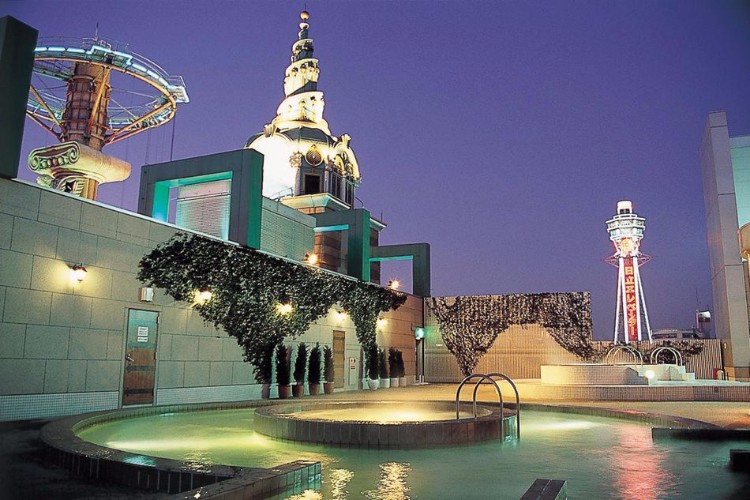
A leisure facility where you can enjoy onsen, or hot springs, from around the world. With pools, beauty facilities, a food court and a park for children, as well as a hotel with a view of Tsutenkaku, you can easily spend a whole day enjoying yourself here. It is one of the rare placees you can enjoy a wide variety of onsen in the city.
Nanzo- in
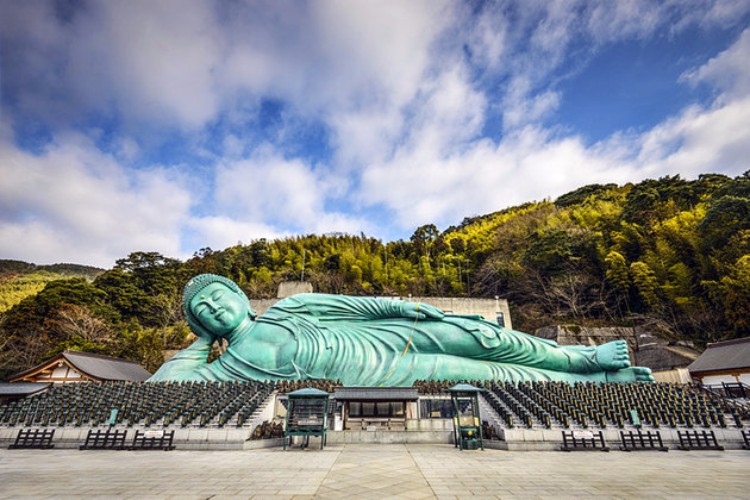
Nanzo-in Temple is a Shingon sect Buddhist temple in Sasaguri, Fukuoka. It notable for its bronze statue of a reclining Buddha, said to be the largest bronze statue in the world.The Reclining Buddha's dimensions are magnificent, 41 meters in length, 11 meters in height, and weighing in tons.
Ohori Park
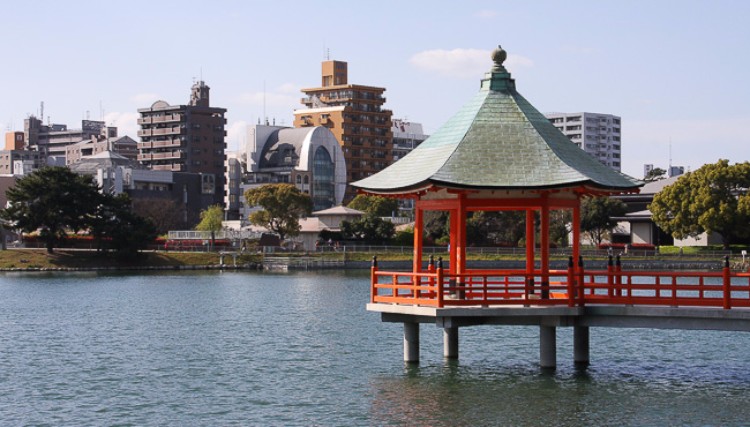
Ohori Park is a pleasant city park in central Fukuoka with a large pond at its center. There is a walking path around the circumference of the pond that is just a little over two kilometers long and is popular for jogging, walking pets and leisurely strolls by the water.There are three islands in the middle of the pond that are connected to the mainland and each other by elegant stone bridges.
Canal City Hakata
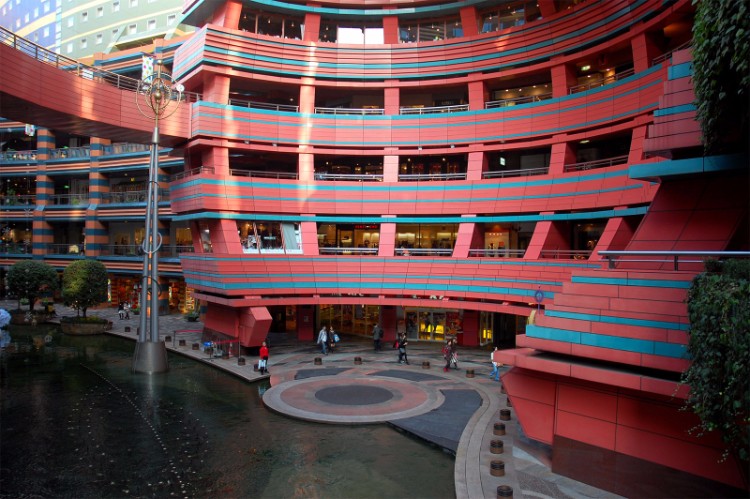
Canal City Hakata is a large shopping and entertainment complex, calling itself a "city within the city". Attractions include about 250 shops, cafes and restaurants, a theater, game center, cinemas, two hotels and a canal running through the complex.